Fall 2024: October 21-25, 2024 IN PERSON (Martinos Center, 149 13th St Charlestown MA)
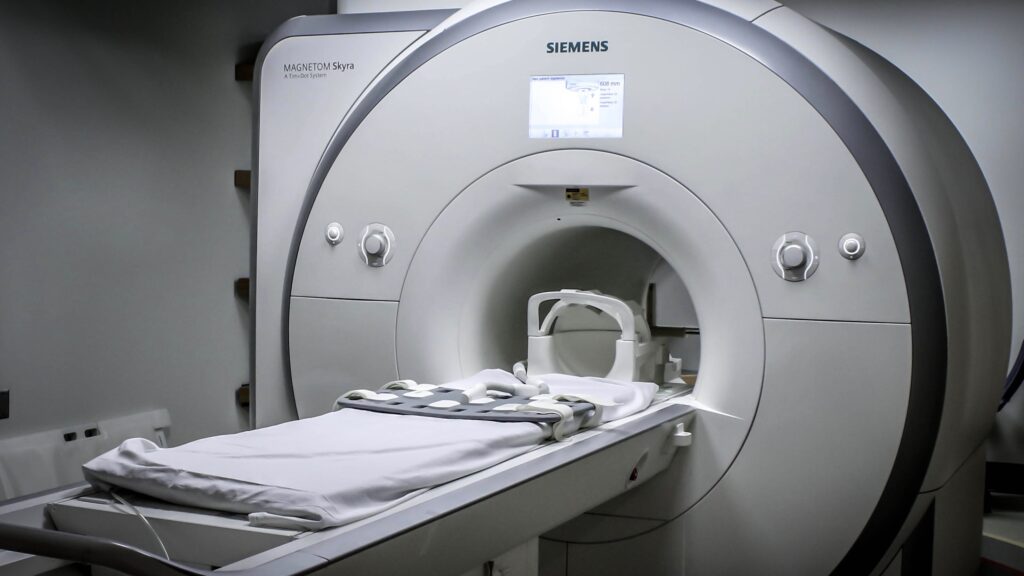
The pioneering work of the Martinos Center spurred an explosion of research in functional brain imaging. While we have known for almost 100 years that neural activity causes localized changes in blood flow, and researchers have more recently demonstrated that neural activity causes localized changes in blood oxygenation, the tools for measuring these signals have historically been highly invasive in animals and moderately invasive in humans. The seminal work of an extraordinary team of physicists, radiologists and neuroscientists at the Martinos Center, demonstrating that these changes and blood flow and blood oxygenation can be detected by the noninvasive technology of MRI, has led to a dramatic increase in functional brain imaging work with humans. Because this noninvasive technique permits many repetitions of experimental procedures on a single subject, it is rapidly becoming the method of choice for neuroscience research in functional brain mapping. The purpose of the present course is to provide an in-depth introduction to this field. It is primarily intended for people new to functional MRI, though experienced scientists have also found the program useful.
Curriculum
Students will receive a firm grounding in the fundamentals of fMRI. This will include the basic physics of MR imaging, the biology and biophysics of the hemodynamic responses to neural activity, data analysis (including both exploratory and statistical analyses), stimulus presentation and response recording in the context of high magnetic fields and electromagnetic pulses, and the design of perceptual and cognitive experiments. Other topics include issues of structural and functional connectivity and the importance of large scale databases containing high-quality functional and structural MRI-based and behavioral data for hundreds and even thousands of subjects. The core faculty is drawn from the staff of the Athinoula A. Martinos Center (of the Massachusetts General Hospital and Massachusetts Institute of Technology) and affiliated faculty from Harvard University, Boston University, McLean Hospital and other institutions.
Registration
Schedule, TBD
contact fmrivfp@mgh.harvard.edu with any questions